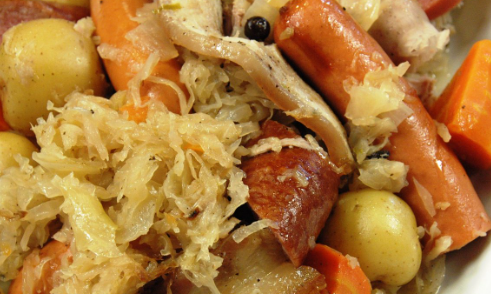
This recipe presents a delightful adaptation of Sally Fallon’s gingered carrots. While it serves as a colorful and refreshing side dish, its true magic shines when incorporated into carrot cake. The kraut not only adds moisture to the cake but also enhances its flavors. With the addition of cream-cheese frosting, this dish becomes a true delight. It’s important to note that due to its high sugar content, this kraut continues to ferment in the refrigerator, gradually becoming more sour over time.
With these detailed instructions, you can easily create your own batch of gingered carrot kraut. Enjoy it as a refreshing side dish or use it to elevate the flavors of your carrot cake. The fermentation process adds depth and complexity to the flavors, making this kraut a versatile and tasty addition to your culinary repertoire.
Yield: About 1 gallon
(fermentation vessel: 1 gallon or larger)
INGREDIENTS:
- 8 pounds carrots, grated
- 1–2 tablespoons grated fresh ginger
- Juice and zest of 1 lemon
- 1½–2 tablespoons unrefined sea salt
INSTRUCTIONS:
- Prepare the Carrot Mixture.
- In a large bowl, combine the grated carrots, grated fresh ginger, lemon juice, and zest.
- Add 1½ tablespoons of unrefined sea salt to the mixture.
- With your hands, massage the salt into the veggies, ensuring it is evenly distributed. Taste the mixture to check if it is slightly salty without being overwhelming. Add more salt if needed. You will notice that the carrots will become briny and start to release liquid.
- Transfer to a Fermentation Vessel.
- Transfer the carrot mixture, a few handfuls at a time, to a 1-gallon jar or crock.
- Press down firmly with your fist or a tamper to remove any air pockets.
- As you press the carrots, you should see some brine rise to the top.
- Leave 4 inches of headspace for a crock or 2 to 3 inches for a jar.
- Cover and Weight Down.
- Cover the carrots with a piece of plastic wrap or another primary follower.
- For a crock, place a plate that fits the container’s opening on top of the carrots, covering as much of the surface as possible. Use a sealed water-filled jar as a weight to press down the plate.
- For a jar, use a sealed water-filled jar or a ziplock bag as a combination follower and weight.
- Fermentation Process.
- Place the fermentation vessel on a baking sheet and set it somewhere nearby, away from direct sunlight, and at a cool temperature.
- Allow the carrots to ferment for 7 to 14 days.
- Check daily to ensure that the carrots remain submerged in the brine. Press down if needed to bring the brine back to the surface.
- Testing and Storing.
- After 7 days, you can start testing the kraut. It should have a crisp-sour flavor, and the brine should be thick and rich.
- Once the kraut is ready, transfer it to smaller jars and press it down to remove any air pockets.
- Pour any remaining brine into the jars.
- Tighten the lids and store the kraut in the refrigerator.
- This kraut will keep well for up to 1 year but is best consumed within 6 months.