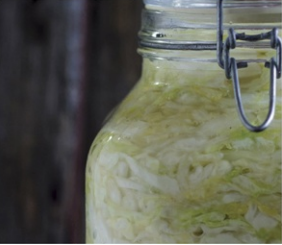
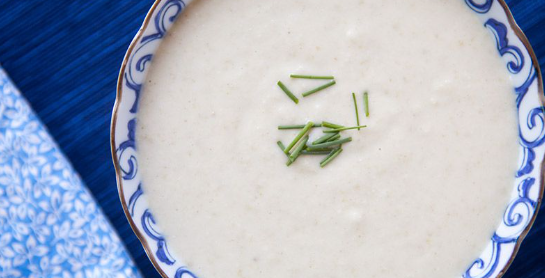
This recipe provides a step-by-step guide to fermenting horseradish root into a flavorful and tangy paste. Fermented horseradish offers a unique twist on traditional horseradish, adding depth of flavor and enhancing its preservation. The fermentation process not only preserves the horseradish but also develops its heat and complexity. The resulting paste can be used as a condiment in various dishes or incorporated into a horseradish cream sauce for added creaminess. This recipe offers an alternative method using only salt for preservation, resulting in a drier and milder product.
Yield: About ½ pint
(fermentation vessel: 1 pint)
INGREDIENTS:
- ½ pound horseradish root
- 1 teaspoon unrefined sea salt
- 2–3 tablespoons previously fermented brine or lemon juice
INSTRUCTIONS:
- Peel the horseradish root and cut it into small pieces. Process the pieces in a food processor until a paste consistency is achieved. Sprinkle the salt over the paste and add the fermented brine or lemon juice for added fermentation and flavor.
- Press the horseradish paste firmly into a pint jar, ensuring it is compacted at the bottom. Place a quart-sized ziplock bag on top of the ferment, pressing it down onto the paste. Fill the bag with water, seal it, and use it as both a follower and weight to keep the horseradish submerged during fermentation.
- Set the jar aside on a baking sheet in a location nearby, away from direct sunlight, and at a cool temperature. Allow the horseradish paste to ferment for 3 to 7 days. Check daily to ensure the paste remains submerged, pressing it down if necessary to bring the brine back to the surface. It is normal to see some harmless scum on the top, but refer to the appendix for guidance if concerned.
- Start testing the ferment on day 3. The horseradish paste is ready when it reaches the desired level of heat and tastes similar to prepared horseradish.
- Tighten the jar lid and store the fermented horseradish paste in the refrigerator. It can be kept refrigerated for up to 6 months, maintaining its flavor and quality.
TIPS:
- Choosing the Horseradish Root: Select fresh horseradish roots that are firm, with no soft spots or signs of mold. This will ensure a better flavor and quality in your final paste.
- Food Processor Consistency: When processing the horseradish root, aim for a paste consistency that is not too coarse or too fine. This will give the paste a good texture and make it easier to spread or incorporate into other recipes.
- Adjusting Heat: The heat level of the fermented horseradish paste can vary depending on personal preference and the maturity of the horseradish root. Taste the paste during fermentation and adjust the fermentation time accordingly to achieve the desired level of heat.
- Ensure Submersion: It is crucial to keep the horseradish paste submerged in the brine during fermentation to prevent spoilage. Check daily to make sure the paste remains beneath the surface and use the ziplock bag filled with water as a weight to keep it pressed down.
- Fermentation Duration: Fermentation times can vary depending on factors like temperature and personal preference. Start tasting the paste around day 3 and continue to ferment until it reaches the desired level of flavor. If you prefer a milder taste, a shorter fermentation period may be sufficient, while a longer fermentation will result in a stronger flavor.