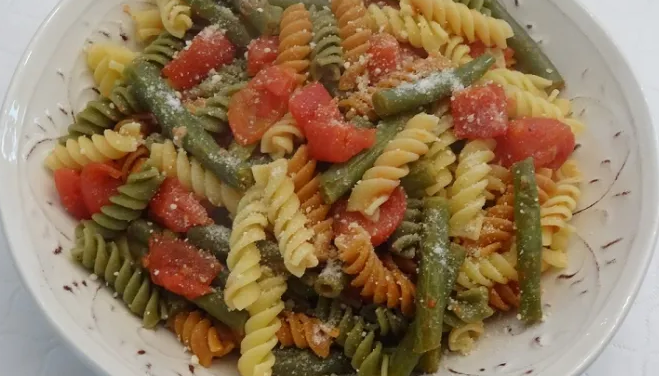
Indulge in the vibrant and flavorful world of Flavored Fresh Pasta with this delightful recipe. A perfect blend of fresh herbs, eggs, and all-purpose flour creates pasta that not only pleases the eyes but also tantalizes the taste buds. The aromatic herbs infuse the pasta with a delightful green tinge, adding an enticing twist to your pasta dishes. Whether you choose to use minced sage, rosemary, thyme, basil, chervil, or parsley, the result will be a pasta that stands out with its bright and fresh flavors. With a straightforward process and a touch of creativity, you’ll be able to craft restaurant-quality pasta right in your kitchen.
MAKES: 4 servings (about 1 pound)
TIME: At least 1 hour, largely unattended
INGREDIENTS:
- 1 tablespoon minced fresh sage leaves, 1 teaspoon minced fresh rosemary or thyme leaves, or 1/4 cup minced fresh basil, chervil, or parsley leaves
- 2 cups all-purpose flour, plus more as needed
- 1 teaspoon salt
- 3 eggs
INSTRUCTIONS:
- Combine the minced herbs with the flour and salt in the food processor container and pulse once or twice to mix.
- Add the eggs all at once and turn the machine on.
- Process the mixture just until a ball begins to form, usually about 30 seconds.
- Adjust the dough consistency by adding a few drops of water if it appears dry and grainy or incorporate a tablespoon of flour if the dough sticks to the side of the bowl.
- The amount of flour needed depends on the quantity and moisture content of the herb used. For example, 1/4 cup of parsley will require more flour than 1 teaspoon of rosemary.
- Whisk together 1 1/2 cups of flour, the minced herb, and salt on a clean counter or large board, creating a well in the middle.
- Place the eggs into the well. Beat the eggs with a fork, gradually incorporating small amounts of flour at a time.
- When it becomes difficult to stir with the fork, use your hands to knead the dough, pushing it against the board and folding it repeatedly until the dough is not sticky and has a stiff consistency.
- If needed, add small amounts of flour during kneading to achieve the desired consistency.
- Sprinkle the dough with a bit of the reserved flour and cover it with plastic wrap or a cloth. Allow it to rest for about 30 minutes.
- If desired, the dough can be refrigerated, wrapped in plastic, until you’re ready to roll it out, for up to 24 hours.
- Add the eggs and egg yolks all at once and turn the machine on. Process the mixture just until a ball starts to form, which usually takes about 30 seconds.
- If the dough appears dry and grainy, add a few drops of water. If it sticks to the side of the bowl, incorporate a tablespoon of flour.
- On a clean counter or large board, mix 1 1/2 cups of the all-purpose flour with the salt.
- Create a well in the middle of the flour and add the eggs and egg yolks into it.
- Gradually incorporate the flour into the eggs, stirring with a fork. As it becomes difficult to stir with the fork, use your hands to knead the dough.
- Knead the dough by pushing it against the board and folding it repeatedly until it is no longer sticky and has a firm consistency. If needed, add small amounts of flour during the kneading process.
- Sprinkle the dough with a bit of the reserved flour and cover it with plastic wrap or a cloth. Allow it to rest for approximately 30 minutes.
- If desired, the dough can be refrigerated, wrapped in plastic, for up to 24 hours before rolling it out.
- Attach a pasta machine to the counter and lightly flour your work surface.
- Cut off about one-third of the dough and cover the rest with plastic or cloth while you work.
- Roll the dough in flour and flatten it into a rectangle approximately the width of the pasta machine.
- Set the machine to its highest (thickest) setting and pass the dough through. Repeat this step, setting the machine to its next-thinnest setting each time.
- Work your way down through the numbers, passing the dough through the machine twice each time. Add small amounts of flour if the dough sticks.
- Pass the dough through the machine’s thinnest setting, and if necessary, repeat the process with the next-thinnest setting once.
- Cut each sheet of pasta into approximately 16-inch rectangles and trim the ends for a neat appearance.
- The dough is now ready to be used. You can keep the sheets to make lasagne or stuffed pasta, or cut them into noodles.
- Use the broadest (tagliatelle) cutter on the pasta machine to cut the noodles, or cut the pasta by hand into broad strips (pappardelle).
- You can cook the noodles right away or hang the strands to dry for up to a couple of hours.
FLAVORED FRESH PASTA VARIATIONS:
- Fresh Spinach Pasta: Add 8 ounces of fresh spinach or 4 ounces of frozen spinach and approximately 1/2 cup flour. Steam the fresh spinach, drain, squeeze out excess water, and finely chop it before adding it with the eggs to the dough.
- Fresh Red Pasta: Use red bell pepper or beets for vibrant colors. Add 1/2 cup well-drained puréed cooked beets or puréed cooked red bell pepper with another 1/2 cup flour. Proceed with the recipe.
- Whole-Leaf Herbed Fresh Pasta: For an impressive presentation, roll the dough to the thinnest setting, place whole or roughly chopped stemmed herb leaves (parsley, chervil, tarragon, or small basil or sage leaves) randomly on one sheet of pasta, sprinkle with a tiny bit of water, and put another sheet of pasta on top. Roll the sheets together to encase the herbs between the layers of dough.